
Authentic Indian Food vs Westernised Curry
Ever walked into an Indian restaurant and wondered if the tikka masala on your plate actually exists in India? You are not alone. Millions of people around the world eat what they think is Indian food without realising that what they are eating might be about as Indian as fortune cookies are Chinese (spoiler alert: fortune cookies were invented in California).
The difference between Indian and Western curry is huge and once you understand it, your whole perspective on Indian cuisine changes forever. Let me break it down in a way that makes sense, without all the fancy culinary terms that make your head spin.
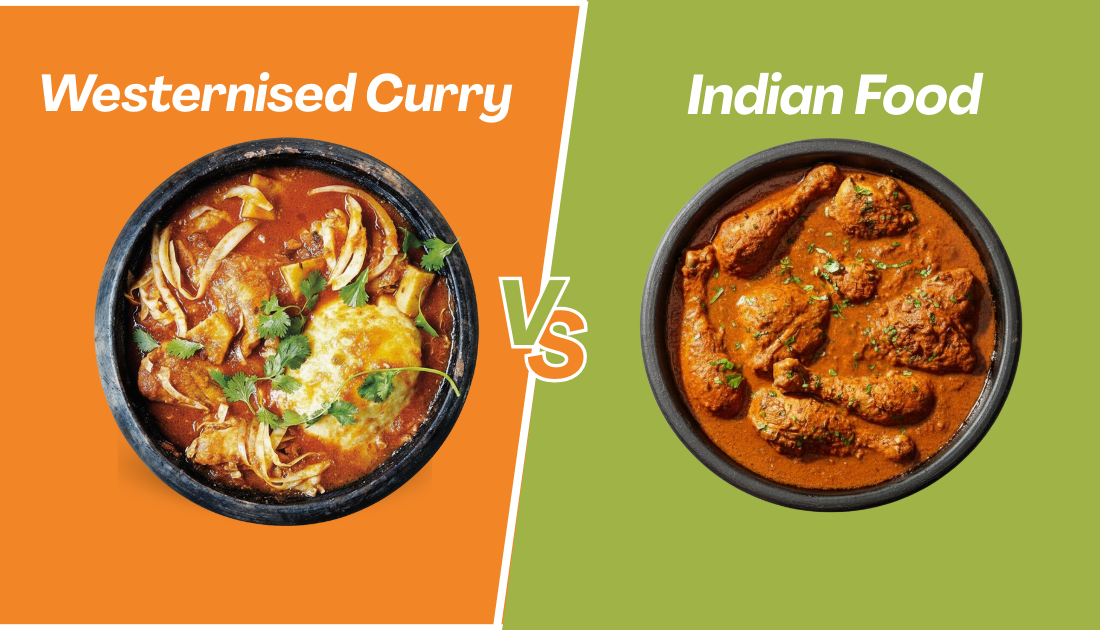
What Actually Is Authentic Indian Food?
Traditional Indian curry is not one thing. It is thousands of things. India has 28 states and 8 union territories and each region cooks completely differently. A curry from Punjab (in the north) tastes nothing like a curry from Kerala (in the south). The only thing they have in common is that they both use spices.
Authentic Indian food uses whole spices that are ground fresh. Cooks roast cumin seeds, coriander seeds and peppercorns in a pan until they smell amazing, then grind them into powder. This takes time and effort, but the flavour is completely different from using pre-ground spices from a jar.
Real Indian cooking also depends on the base. Most curries start with onions, tomatoes, ginger, and garlic that get cooked down into a paste. This paste (called masala) is the foundation of the dish. In homes across India, mothers and grandmothers spend 20 to 30 minutes just getting this base right before they even add the main ingredients.
How Did Westernised Curry Happen?
British curry vs Indian curry is basically the story of what happened when British colonisers tried to recreate Indian food back home. During the British rule of India (1858 to 1947), British soldiers and officials fell in love with Indian flavours. When they returned to Britain, they wanted to keep eating curry, but they had no idea how to make it properly.
So they invented something called curry powder. Instead of using 15 different spices ground fresh, they mixed together turmeric, coriander, cumin, and a few other spices into one yellow powder. They put this powder in everything and called it curry. This is like trying to recreate Italian food by mixing oregano, basil, and garlic powder into one jar and calling it pizza spice.
Later, when Indian and Pakistani immigrants opened restaurants in Britain and America, they realised that British and American customers found authentic Indian food too spicy, too oily, or too unfamiliar. So they adapted their recipes. They added more cream, more sugar, and less heat. They created dishes that never existed in India, like chicken tikka masala and vindaloo (well, vindaloo exists in Goa, but the British version is nothing like the original).
7 Big Differences Between Authentic Indian and Westernised Curry
-
The Spice Situation
Authentic Indian food uses whole spices that get roasted and ground. Westernised curry uses curry powder, which is a pre-made mix. Imagine the difference between freshly squeezed orange juice and orange-flavoured drink powder. That is the gap we are talking about here.
-
The Base of the Curry
Traditional Indian curry starts with slow-cooked onions, tomatoes, ginger, and garlic. This takes 20 to 30 minutes. British Indian Restaurant (BIR) style curry often uses a pre-made base sauce that gets reheated with spices and protein. This saves time but loses depth of flavour.
-
The Use of Cream and Sugar
Westernised curry loves cream. Butter chicken? Loaded with cream. Korma? Swimming in cream. Most authentic Indian curries use yoghurt, coconut milk, or nothing at all. They also rarely add sugar, while Western versions often include sugar to balance the flavours for people who are not used to complex spice profiles.
-
The Heat Level
Authentic Indian food can be mild or spicy depending on the region. But when it is spicy, it is SPICY. Westernised Indian food is usually toned down. A British vindaloo might make you sweat a little, but a proper Andhra curry will make you question your life choices (in the best way possible).
-
The Variety of Dishes
Traditional Indian curry comes in hundreds of varieties. Every region, every community, every family has their own recipes. Westernised Indian restaurants usually have the same 15 dishes on every menu: tikka masala, korma, vindaloo, madras, jalfrezi. These are greatest hits, but they barely scratch the surface of what Indian food actually is.
-
The Rice and Bread
Authentic Indian food serves different types of rice and bread depending on the region. Basmati rice in the north, red rice in Kerala, and various breads like roti, paratha, and naan (which is actually a special occasion bread, not an everyday thing). Western Indian restaurants serve naan with everything and usually just one type of rice.
-
The Colour
Thanks to curry powder and food colouring, Westernised Indian food often has that bright orange or yellow colour. Authentic Indian food comes in all colours depending on the ingredients: red from tomatoes and Kashmiri chilli, green from spinach and coriander, brown from onions and white from coconut.
Why Does Any of This Matter?
Understanding the difference between Indian and Western curry helps you appreciate both more. Westernised curry is not bad or wrong. It is just different. It evolved to suit different tastes and different circumstances. If you love a good British curry house tikka masala, that is perfectly fine. Enjoy it.
But if you want to explore what traditional Indian curry actually tastes like, you need to go beyond the usual restaurant menu. Try regional Indian restaurants that specialise in food from specific states like Punjab, Kerala, or Bengal. Or better yet, make friends with someone from India and get invited to a home-cooked meal. Nothing beats authentic Indian food made by someone who learned the recipes from their grandmother.
How to Spot Authentic Indian Food?
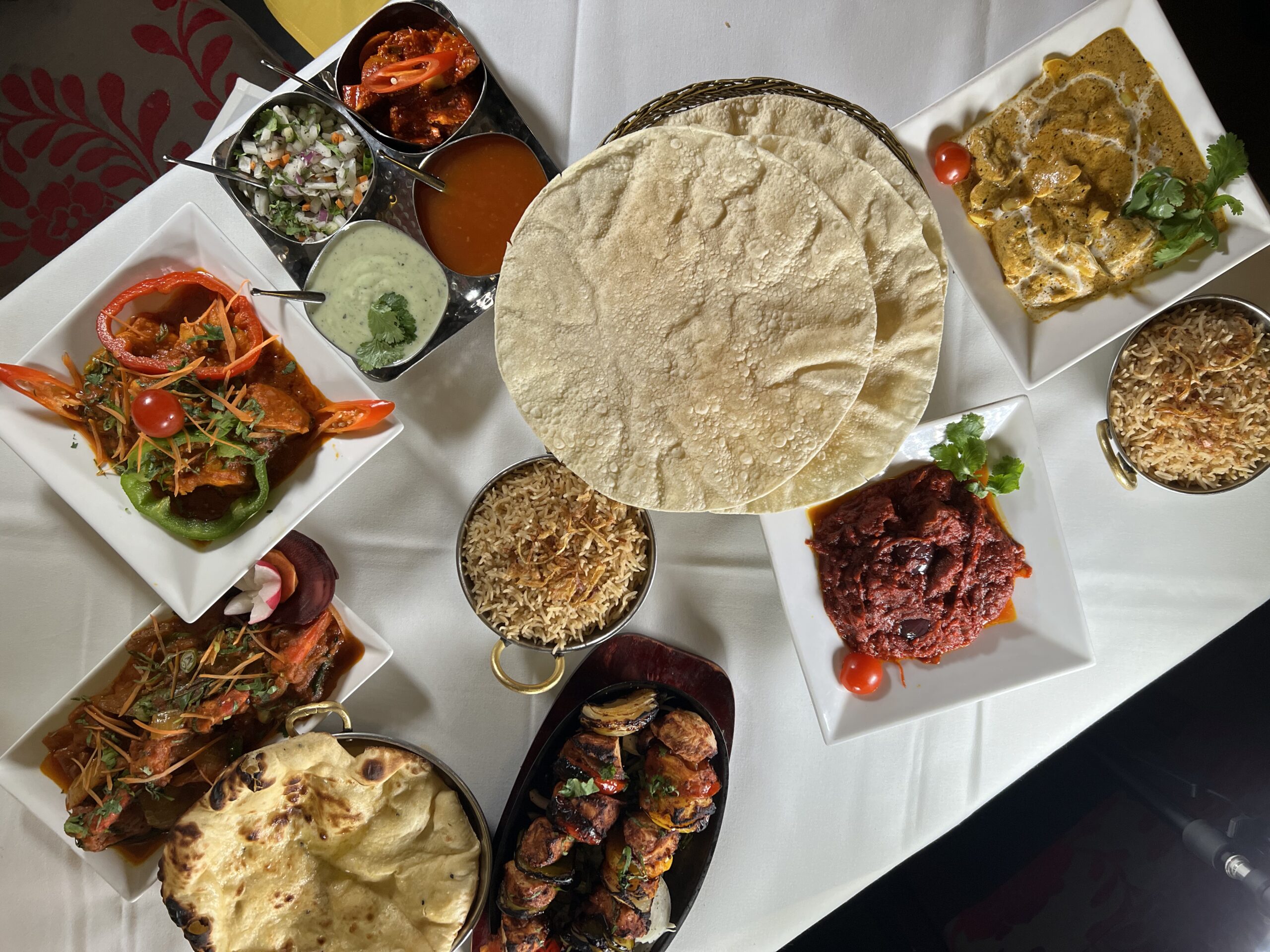
If you want to find authentic Indian food at restaurants, here are some clues: The menu has dishes you cannot pronounce and have never heard of. If everything sounds familiar, it is probably westernised. If you’re craving samosas and don’t feel like cooking and you are in london visit The India or try their takeaway service.
The menu specifies regions or states, like South Indian cuisine or Bengali food or Gujarati thali. The restaurant is full of Indian families. This is always a good sign. The spices taste fresh and complex, not like they came from one premixed powder. The dishes actually vary in flavour from each other. If every curry tastes kind of similar with just a different protein, that is BIR-style cooking.
Check out the Menu here.
Final Thoughts
The debate between authentic Indian food and westernised curry is not about which one is better. It is about understanding what you are eating and appreciating both for what they are. Westernised Indian food introduced millions of people to Indian flavours, and that is a good thing. But if you want to truly experience the depth, variety, and complexity of traditional Indian curry, you need to dig deeper. Try food from different Indian regions. Learn about the spices. Talk to people from India about how their families cook. You will discover that Indian cuisine is one of the most diverse and sophisticated food cultures in the world, and what you have been eating at your local curry house is just the tip of the iceberg.
So next time someone asks you about Indian curry vs British curry, you will know exactly what to say. And maybe, just maybe, you will be inspired to seek out the real deal and taste the difference for yourself.
FAQ
Is curry powder used in India?
Not really. Curry powder is a British invention. In India, cooks use individual spices or spice blends specific to each dish. Every curry has its own unique combination of spices ground fresh.
What is the most authentic Indian curry?
There is no single most authentic curry because India is so diverse. But some classic examples include chicken curry from Kerala, rogan josh from Kashmir, Bengali fish curry and dal from any region (every state makes dal differently).
Why does Indian food in India taste different?
Indian food in India uses fresh spices, different cooking techniques, and recipes that have not been adapted for Western tastes. The ingredients are also different. Indian vegetables, lentils, and even water taste different, which affects the final dish.
Is British Indian Restaurant (BIR) curry bad?
Not at all. BIR curry is its own cuisine that evolved to suit British tastes. It is different from traditional Indian curry, but that does not make it bad. Think of it like American Chinese food or Tex-Mex. It is delicious in its own right.
Can I make authentic Indian curry at home?
Absolutely! You will need whole spices, a good spice grinder or mortar and pestle, fresh ginger and garlic, and patience. Start with simple recipes like dal or aloo gobi (potato and cauliflower curry). YouTube has thousands of videos from actual Indian home cooks showing traditional techniques.
Why is restaurant Indian food so oily?
Both authentic and westernised Indian restaurants use a lot of oil because it carries flavor and creates richness. However, home-cooked Indian food typically uses much less oil. Restaurant food in any cuisine tends to be