
The Difference Between Curry and Tikka Masala (And What To Order Instead)
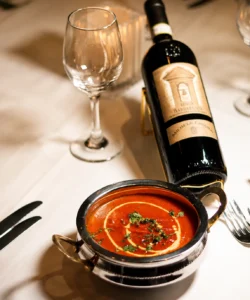
If you’ve ever stood outside an Indian restaurant on Cannon Street squinting at the menu, wondering what on earth separates a “curry” from a “tikka masala,” you’re not alone. It’s one of the most-asked questions we get from customers walking in from the City of London offices around us. Here’s the short answer: the difference between curry and tikka masala comes down to how the meat is cooked and how the sauce is built. Curry is a broad, centuries-old cooking style, while tikka masala is one very specific, beloved dish within that style. Let’s break it down properly, so you can order with total confidence next time.
What Is “Curry,” Really?
Here’s something that surprises most people: “curry” isn’t one recipe. It’s a category, a bit like calling every stew a “casserole.” As Historic UK explains, the word entered English cookbooks as far back as the 18th century and has been evolving on British soil ever since.
- The word likely comes from the Tamil “kari,” meaning sauce
- In the UK, it became a catch-all term during the British Raj era
- Today it covers hundreds of regional dishes, from a Goan fish curry to a Punjabi rogan josh
So when someone asks for “a curry,” a chef genuinely doesn’t know which one they mean until you tell them more.
What Is Tikka Masala, Exactly?
Tikka masala is far more specific. Chicken tikka masala is thought to have been created by a South Asian chef working in Britain, most likely in Glasgow in the 1970s, when a customer asked for something less dry than plain tandoori chicken. The story is well-documented, so much so that in 2009 a Glasgow MP even tabled a motion in the UK Parliament asking for the city to be officially recognised as its birthplace.
In short:
- Tikka = marinated meat, roasted in a tandoor
- Masala = the spiced sauce it’s served in
- Tikka masala = tandoori tikka pieces finished in a mild, creamy, tomato-based masala sauce
The Difference Between Curry and Tikka Masala: Key Differences You Should Know
| Curry (general) | Tikka Masala (specific) | |
|---|---|---|
| Meaning | A broad cooking style | One named dish |
| Sauce | Varies wildly by region | Creamy, tomato-based, mild-medium |
| Cooking method | Simmered, dry-fried, or slow-cooked | Meat is tandoor-roasted first, then simmered in sauce |
| Spice level | Can be mild to fiery | Almost always mild |
How Spicy Is Indian Food, Actually?
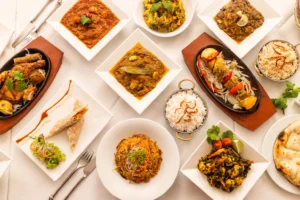
This is the question that stops most first-timers from ordering with confidence. Here’s a rough heat guide we use with our own guests at The India:
- Mild: Korma, tikka masala, butter chicken
- Medium: Rogan josh, dhansak, jalfrezi
- Hot: Madras, vindaloo, phall
If you’re nervous, always ask your server. A good Indian restaurant will happily adjust the heat for you.
What Is Tandoori Cooking?
Tandoori simply refers to food cooked in a tandoor, a cylindrical clay oven that reaches extremely high temperatures. It’s how we get that smoky char on chicken tikka, naan bread, and lamb chops. No sauce, no gravy, just direct heat and marinade doing the work.
What Should a Beginner Order at an Indian Restaurant?
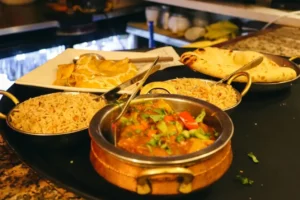
If this is genuinely your first time, here’s a simple, low-risk order that almost never disappoints:
- Starter: Chicken tikka or vegetable samosa
- Main: Butter chicken or tikka masala (both mild, both crowd-pleasers)
- Bread: Plain or garlic naan
- Rice: Pilau rice
- Drink: Mango lassi to cool things down
This is exactly the kind of order our regulars near Cannon Street tend to start with before branching out.
Is Indian Food Healthy?
It genuinely can be. Dishes built on lentils, grilled tandoori meats, and vegetable-forward curries fit comfortably into a balanced diet. The NHS Eatwell Guide points out that a plate rich in vegetables, pulses, and lean protein, exactly what a good vegetable curry or tandoori dish offers, supports healthy eating. Where it gets heavier is in cream-based sauces and fried starters, so if you’re watching your intake, ask for less cream or a tomato-based sauce instead.
Conclusion
So, what’s the real difference between curry and tikka masala? Curry is the wide, welcoming umbrella. Tikka masala is one of its most famous residents, a mild, creamy, tandoor-roasted dish that Britain fell in love with decades ago and never let go. Next time you’re near College Hill in the City of London, come and taste the difference for yourself. Book a table at The India and let our team walk you through the menu, whether you want something safely mild or you’re ready to try the real heat.
Frequently Asked Questions
1. What is the difference between curry and tikka masala?
Curry is a broad category of spiced dishes, while tikka masala is one specific dish made from tandoor-roasted meat finished in a creamy tomato sauce.
2. Is tikka masala British or Indian?
It’s widely believed to have been invented by a South Asian chef in Britain, making it a British-Asian fusion dish rather than a traditional dish from India itself.
3. What is the mildest curry to order?
Korma is generally the mildest, closely followed by tikka masala and butter chicken.
4. What is tandoori cooking?
Tandoori refers to food cooked in a tandoor, a very hot clay oven, giving meat a smoky, charred flavour without added sauce.
5. What should I order at an Indian restaurant for the first time?
Start with chicken tikka or a samosa, followed by butter chicken or tikka masala with naan and pilau rice.
6. How spicy is Indian food generally?
It ranges hugely, from very mild (korma) to very hot (vindaloo, phall), so you can always ask your server to adjust the heat.
7. Is Indian food healthy?
Yes, when it includes vegetables, lentils, and grilled tandoori meats, though cream-heavy sauces and fried starters are best enjoyed in moderation.
8. What’s the difference between tandoori chicken and tikka masala?
Tandoori chicken is served dry, straight from the oven, while tikka masala takes those same roasted pieces and adds a creamy sauce.