
The World's Best Biryani
Our Top 10, Ranked
Biryani is judged on how the rice and meat or vegetables are layered and slow-cooked together — not simply served side by side. We rank ten dishes that earn a genuine claim to the title, and share how The India, Cannon Street prepares our own.
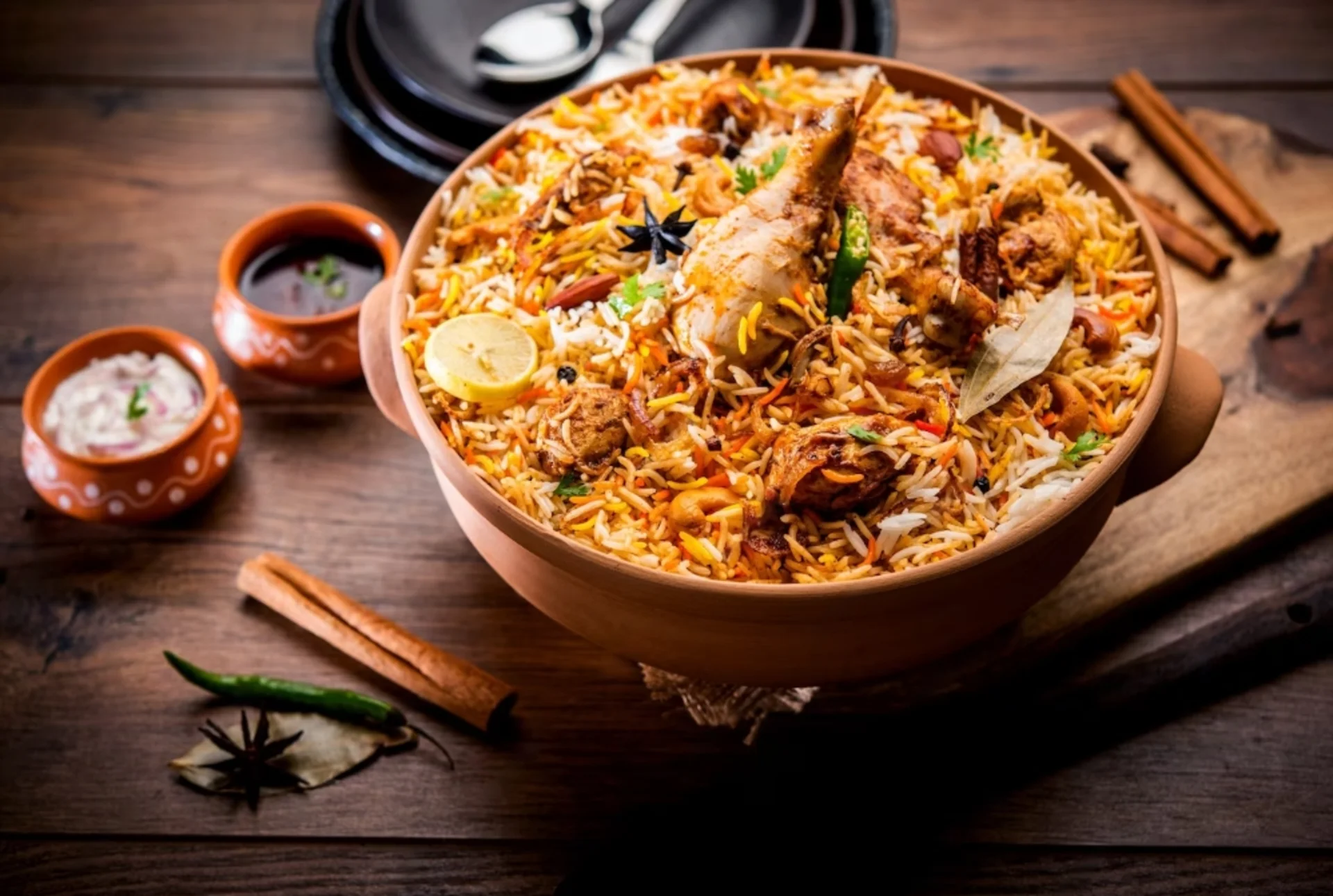
Quick answer: The best biryani is judged on technique — how well the rice and protein layers come through after slow, sealed (dum) cooking — not just on how many spices go into the pot. Hyderabadi and Pakistani biryani bring the most heat; Lucknowi and Iranian Tahchin the most restraint. All ten below are worth knowing, and all ten are the same layered idea done differently.
What Makes a Biryani World-Class?
In short: technique matters more than the ingredient list. Here's what separates a genuinely great biryani from a generic curry-and-rice plate.
Distinct Layers
Rice and protein should be clearly layered, not stirred into a mixed pilaf.
The Dum Seal
A sealed pot, slow-cooked, so the rice finishes in the meat's own steam and juices.
Balanced Spicing
Fragrant and layered, not just heavy-handed with chilli for the sake of it.
Regional Roots
A genuine claim to a place and tradition — not a one-size-fits-all "curry rice".

Our Top 10 Best Biryani Dishes in the World
Ten regional styles, ranked for how well each one delivers on layering, technique and genuine tradition.
Hyderabadi Biryani
From Hyderabad, India, widely credited to the kitchens of the Nizam rulers. Basmati rice is layered with meat marinated in saffron, cardamom and cloves, then slow-cooked so the flavours merge rather than sit side by side. Rich and spice-forward — the benchmark most other biryanis get compared against.
Lucknowi Biryani
A gentler style built around fragrant basmati and a lighter hand with spice, traditionally sealed using the dum pukht method — a dough-sealed pot that steams the meat in its own juices. Boiled eggs and potatoes are a common addition.
Kolkata Biryani
Traces back to the Nawabs of Awadh, who brought their court cooking with them to the city. The signature touch is a whole potato, slow-cooked in the same spiced stock as the meat, alongside a boiled egg — milder than Hyderabadi, letting the potato and rice carry more flavour.
Dum Biryani
"Dum" refers to the sealed, slow-steaming method itself — a technique tracing back to the Mughal period — rather than one single regional recipe. Vegetarian versions swap in paneer or mixed vegetables for the same layering process.
Pakistani Biryani
Leans into a heavier hit of whole and ground spices — cumin, coriander, cloves, cardamom — cooked through with yoghurt, tomatoes and fried onions until the rice takes on a deep, reddish colour. Punchier and tangier than most Indian styles.
Sindhi Biryani
From Pakistan's Sindh province, known for stacking in extra layers — potatoes, fried onions, a generous handful of coriander — on top of the usual saffron-spiced rice. A common centrepiece at weddings, prized for its sharper, more tart edge.
Ambur Biryani
From the town of Ambur in Tamil Nadu, standing out for using short-grain seeraga samba rice instead of basmati, which absorbs the meat's juices differently for a stickier, more compact texture. Traditionally served with dalcha, a lentil and meat gravy, on the side.
Iranian Biryani (Tahchin)
Barely resembles the others on this list: saffron rice mixed with yoghurt and egg, pressed into a pan with layers of chicken or lamb, and baked until the base forms a golden, almost cake-like crust. Closer to a baked rice terrine than a spooned biryani.
Malaysian Biryani
Reflects Malaysia's Indian-Malay food history: basmati cooked with cinnamon and cardamom, layered with chicken or lamb, finished with raisins and cashews for a sweeter, richer edge than most South Asian versions.
Arabian Biryani
Favours a lighter spice mix, leaning on saffron, dried fruits and toasted nuts alongside chicken or lamb for a dish that's sweeter and less chilli-forward — a useful reference point if Hyderabadi or Pakistani biryani feels too intense.
Biryani Styles at a Glance
| Style | Region | Signature Technique | Typical Protein | Spice Level |
|---|---|---|---|---|
| Hyderabadi | Hyderabad, India | Dum-sealed, saffron marinade | Chicken, mutton | High |
| Lucknowi | Lucknow, India | Dum pukht (dough-sealed pot) | Chicken, mutton | Mild |
| Kolkata | Kolkata, India | Potato and egg layered in | Meat | Mild–medium |
| Dum Biryani | Various, India | Dough-sealed slow steaming | Meat or paneer/veg | Medium |
| Pakistani | Pakistan | Yoghurt and tomato base | Chicken, beef, goat | High |
| Sindhi | Sindh, Pakistan | Extra onion and herb layers | Chicken, mutton | High |
| Ambur | Tamil Nadu, India | Short-grain seeraga samba rice | Meat, with dalcha | Medium |
| Tahchin | Iran | Baked, crusted rice cake | Chicken, lamb | Mild |
| Malaysian | Malaysia | Sweet spice, raisins, cashews | Chicken, lamb | Mild–medium |
| Arabian | Gulf region | Dried fruit and toasted nuts | Chicken, lamb | Mild |
How We Prepare Biryani at The India, Cannon Street
This isn't a niche obsession — biryani topped Swiggy's "How India Swiggy'd" report as India's most-ordered dish for the 10th year running in 2025, with 93 million orders placed. At The India, our biryani is layered and slow-cooked the traditional way, with a vegetable biryani always on the menu for vegetarian guests — see our full menu or read about curry vs. tikka masala if you're deciding what else to order.
- Ask before you assume the spice level — house biryani is often milder than a Hyderabadi or Sindhi-style dish by default.
- Order raita on the side — a cooling yoghurt pairing, not an afterthought, and it balances a spice-forward biryani well.
- Don't stir it straight away — let the top layer settle a minute so you get a proper mouthful of both rice and filling, not an unevenly mixed plate.
Biryani FAQs
Common questions about the world's biryani styles and ordering it at The India.
Biryani layers marinated meat or vegetables with par-cooked rice and finishes cooking everything together in a sealed pot, so the rice absorbs flavour from the layer below it. Pilaf is typically cooked as one mixed dish from the start, with a lighter flavour transfer.
Hyderabadi, Pakistani and Sindhi biryani are generally the most heavily spiced on this list. Lucknowi biryani and Iranian Tahchin are the mildest.
No. Curry is a spiced sauce-based dish typically served over or alongside rice, while biryani is a layered rice dish in which the rice itself is cooked with the meat, spices and stock.
Yes. Alongside our meat biryani, we keep a vegetable biryani on the menu, layered and slow-cooked using the same method.
Dum refers to the sealed, slow-steaming cooking method — the pot is sealed, traditionally with a dough lid, so the rice and meat finish cooking together in their own trapped steam.
Most use long-grain basmati for its fragrance and firm texture, but regional exceptions exist — Ambur biryani, for example, traditionally uses short-grain seeraga samba rice for a stickier finish.
Yes. Biryani is available for takeaway and delivery alongside dine-in — see our takeaway guide for how to order.
Lucknowi biryani or Iranian Tahchin are the gentlest options on this list. At The India, just let our team know you'd prefer it milder when you book or order.